Indonesia has refused the UN High Commissioner for Human Rights access to West Papua since 2019. This round-up details the human rights abuses Indonesia has committed in West Papua during that time.
______________________________________________________________________
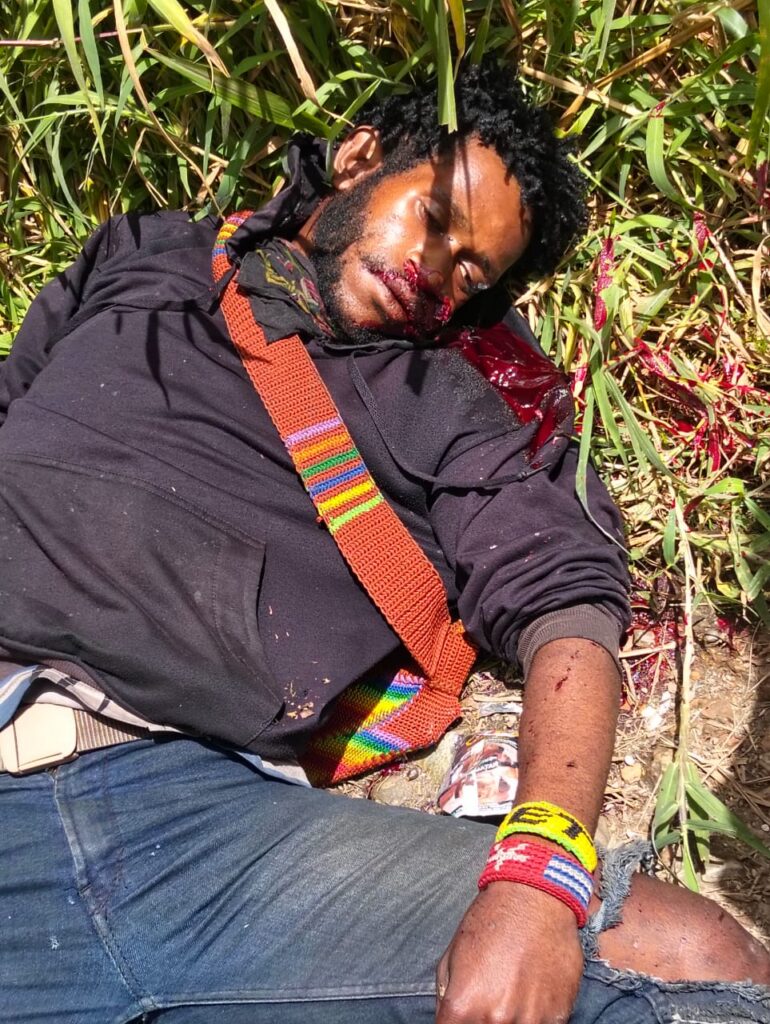
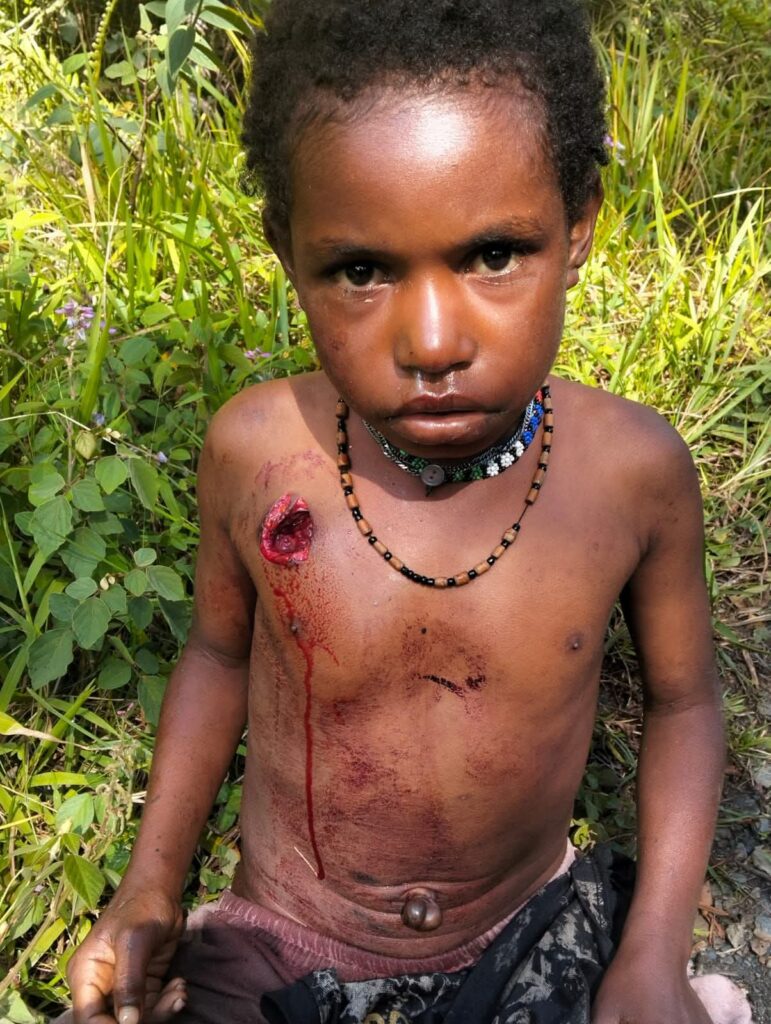
The ULMWP urges world leaders to renew the outstanding demand for the UN High Commissioner for Human Rights visit to West Papua, in the wake of the Dogiyai massacre of six West Papuans by the Indonesian police.
Since 2019, 111 UN member states – a clear majority of the UN General Assembly – have demanded a visit to West Papua by the UN High Commissioner for Human Rights (OHCHR). The first of these demands was made in August 2019 by the Pacific Islands Forum (PIF), who labelled West Papua ‘the festering human rights sore’ of the Pacific region. Despite this pressure, Indonesia has consistently and deliberately blocked UN access to West Papua.
More than six years have passed since the initial state-level demand for a UN visit was made. To underscore the urgency of a UN High Commissioner for Human Rights visit, the ULMWP has provided a breakdown of how the human rights situation in West Papua has deteriorated since 2019.
Displacement:
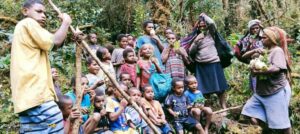
- At least 107,039 West Papuans are currently displaced by Indonesian military operations – perhaps one in fifteen West Papuans has been a refugee since 2019;
- More than 20,000 West Papuans were displaced in 2025 alone;
- A minimum of 1110 West Papuans have died as a result of internal displacement, from disease, malnutrition, or as a result of inadequate medical facilities;
- Only localised or temporary returns home have been documented, such as 353 returnees in Maybrat in 2022;
- Some IDPs have been displaced more than once, such as 900+ in Intan Jaya who were forced to leave their homes a second time in mid-2025;
- Indonesia has at times bombed makeshift refugee camps in West Papua, including in Puncak in February 2026.
Extra-judicial killings:
- It is impossible to verify the true number of West Papuans killed by Indonesian security forces, due to Indonesia’s strict media and NGO reporting ban, and routine misinformation spread by the Indonesian state in the wake of killings;
- However, it is likely that at least 653 West Papuans have been killed since December 2018 (the numbers below are minimum estimates);
- 2019: 278
- 2020-2021: 93
- 2022: 33
- 2023: 81
- 2024: 40
- 2025-2026: 128 so far
- Mass killings are common and accountability is effectively non-existent. Emblematic mass killings during this period include:
- Fifteen civilians murdered in Puncak, April 2026.
- Fifteen civilians massacred in Soanggama village, Intan Jaya, in October 2025;
- Up to fifteen civilians executed during a military raid in Intan Jaya in May 2025;
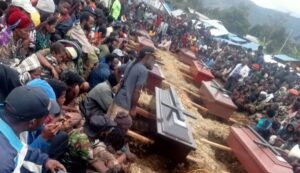
- ‘Bloody Wamena’: Ten Papuans murdered by security forces (pictured above) in Wamena in February 2023;
- Ten Papuan civilians massacred in Yahukimo and Fakfak in September 2023;
- Fifteen killed in Kiwirok in 2021.
Militarisation:
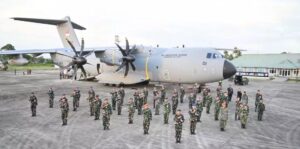
- As of December 2025, at least 83,177 security forces were stationed in West Papua, roughly one for every twenty-two Indigenous Papuans;
- This figure includes 56,517 soldiers and 26,660 police, but does not include forces temporarily deployed to West Papua from other regions of Indonesia, so the real number is likely to be higher;
- At least 40,000 additional troops have been deployed to West Papua since 2019;
- Hundreds of military posts have been established in West Papua during this time; while no hard figure is available for the entire territory, we know that 31 checkpoints were established between July and September 2025 in Intan Jaya alone;
- Indonesia is using a range of technologically advanced weaponry on West Papuans, including Brazilian‑made EMB‑314 Super Tucano fighter jets, Chinese blowfish drones, and UK-made sniper rifles.
Environmental destruction:
- Ecocide in occupied West Papua has increased dramatically since 2019, as Indonesia seeks to use West Papua to secure its future food and energy security;
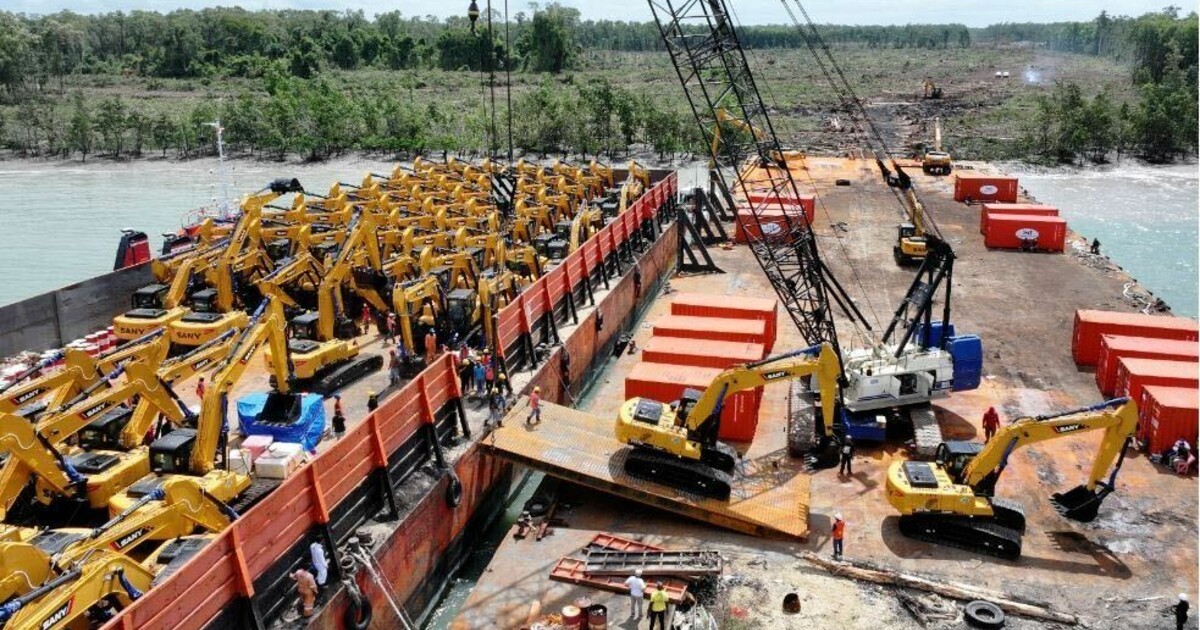
- Indonesia launched the largest deforestation project in human history in West Papua in 2024 – a 3-million-hectare rice and sugarcane food estate in Merauke (pictured above), since expanded to the entire South Papua Province;
- The Merauke food estate – covering an area the size of Wales – is set to release an additional 780 million tonnes of CO2 into the atmosphere, more than doubling Indonesia’s existing emissions;
- Wabu Block, a 1.8-million-hectare gold mine in Intan Jaya, has been under construction since 2021, and continues to displace communities and militarise the Papuan highlands;
- In 2024, BP completed an expansion of its Tangguh gas field in West Papua, which will now supply 35% of Indonesia’s entire gas supply.
Secrecy is the key weapon Indonesia uses to maintain its genocidal and ecocidal rule over West Papua. By keeping its occupation hidden from the world, Indonesia is able to get away with its crimes with near total impunity, while continuing to expropriate West Papua’s huge mineral wealth. Only international intervention, beginning with a UN Human Rights visit, can stop this suffering. Indonesia must face serious diplomatic consequences until the UN High Commissioner access to West Papua is finally allowed to visit West Papua.